
Places to Visit
- home //
- Places to Visit
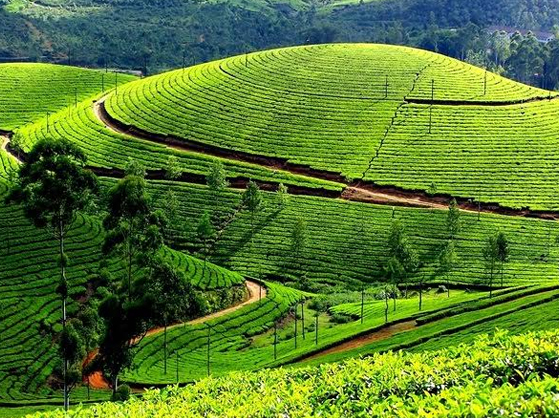
Munnar
<p>Sprawling tea plantations, picture book towns, winding lanes, trekking and holiday facilities make Munnar a unique experience. Munnar is essentially a tea town. The tea plantations have now been taken over by the Tata Tea Company. The visitor is greeted with miles and miles of unending tea plantations on entry into Munnar. Among the exotic flora found in the forests and grasslands here is the Neelakurinji a flower which bathes the hills in blue colour once in twelve years. The Neelakurinji, will bloom next in 2006 AD. Munnar also has the highest peak in South India - Anamudi - which towers over 2695 Mts and is an ideal spot for campers who like to do some trekking. <br /> <br /> In 1877-79, the Poonjar Chief, a subordinate prince to the Maharaja of Travancore, leased a large tract of land comprising 588 sq. km. to a lawyer in the employee of the Travancore Government named J. D. Munro. This tract, henceforth called the Kanan Devan Concession Land, was completely undeveloped, largely unexplored, and covered with thick jungle full of wild elephants and tigers.<br /> The original route to the Anamellens was cut out of the jungle in 1858 by Congreve and Macpherson, and it led to what are now Veloine & Valparai Estates. The first plantation was 20 hectares (50 acres) of coffee put out in 1897 by Carver Mersh. E. J. Martin introduced tea a few years later and cardamom, cinchona and rubber were also added. The latter has now been mostly abandoned.<br /> In 1964 a collaborative venture between Finlays and Tatas was established to develop value-added tea, and in 1976 Tata-Finlays Ltd purchased the black tea producing/marketing operation and other interests. The name of the company was changed to Tata Tea Ltd. in 1983 when Finlays sold their remaining share holdings including the considerable landholdings and manufacturing facilities in Northeastern India. Tata Tea Ltd. justifiably claims to be the largest integrated tea company in the world, with activities spanning the entire spectrum of the industry. </p>
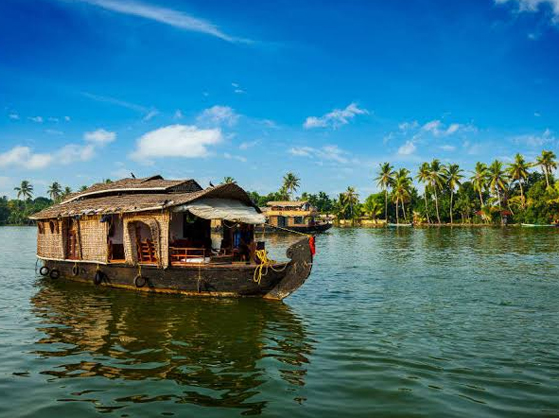
Kumarakom - Backwaters
<p>Kerala is known for its panoramic backwater stretches, lush green paddy fields, highlands and beaches. A major backwater stretch lies in Kottayam district, where a network of rivers and canals empty into the great expanse of water called the Vembanad Lake. Located at Kumarakom 16 km from Kottayam town, the Vembanad Lake, an enchanting picnic spot and a fast developing backwater tourism destination, offers boating, fishing and sight seeing experiences that are truly exhilarating.</p> <p>Kottayam located at a distance of 76 kilometers from Kochi in Kerala, south India, is one of the most riveting backwater destinations in the state. The place and its surroundings make for a beautiful tourist attraction with its vistas of green hills, mangrove forests and coconut groves interposed with waterways, offering excellent opportunities for Aqua Tourism. </p> <p>One can enjoy the rural sights, the abundant marine life, boat cruises and angling tours with the services and privileges offered by the innumerable tour operators and travel agencies in Kerala. A pleasure trip to Vembanad Lake gives you an opportunity to explore the rich flora and fauna that is supported by this enchanting water world. You are free to go canoeing, dingy sailing, catamaran riding and much more. The Vembanad Lake happens to be an important Aqua Tourism destination that entices tourists to its luxury picnic spots by the dozen. With the nearby Kumarakom Bird Sanctuary that is home to exotic water birds, a boat cruise at this breathtaking tourist attraction will leave you speechless with wonder and excitement.</p> <p>Kumarakom is a serenely beautiful and scenic backwater destination, a charming peninsula jutting into the ever-effervescent Vembanad Lake that is dotted with plenty of traditional rice boats and canoes, leaving a scene that is immensely pleasing to the eye.</p> <p>When nature is all you need to recuperate, Kumarakom is undoubtedly one of the most invigorating and fascinating places to unwind in Kerala. The slender coconut palms standing here, there and everywhere, its never ending paddy fields, meandering lagoons and backwaters and mangroves with nestling birds of a hundred varieties will all serve to calm and inspire your mind.<br /> Pristinely beautiful Kumarakom is a charming emerald peninsula jutting into the picturesque Vembanad Lake dotted with innumerable traditional country rafts, boats and canoes. The fresh water of the lake flows into the mainland making a labyrinth of lagoons, canals and waterways.</p> <p>The backwater houses a variety of species of both flora and fauna. It’s rich in marine life especially the exclusive kumarakom karimeen or pearl spotted fish, konju or tiger prawns, njandu or crabs, chemmeen or prawns and many more. As and when the monsoon winds bring rain to the shores of Vembanad Lake, Kumarakom gets transformed into a rich fertile land. The streams and lagoons break their banks to nourish the shrubs that sprout from every available space. The place is renowned for its mangrove shores and the bird sanctuary.</p> <p>Kumarakom is well-equipped with a range of luxury and budget resorts with unique leisure options like ayurveda massage, yoga, meditation, swimming, fishing and boating. The adventurous could indulge in water sports such as wind sailing and water skiing. You could even take a canoe out into the quiet lake, and armed with a fishing rod, catch your own supper. The local spring season emerges from August and coincides with the harvest ferstival of Onam when locals enjoy in festivities and tourism blooms. Kumarakom slumbers on the banks of the famous Vembanad Lake. The Vembanad Lake with its majestic canals, streams and distributaries along its banks weave an intricate and enchantingly beautiful web. The gorgeous green of the fringed palms ripple in the blue waters and blend into wavelets. The whole atmosphere spells peace, bliss and tranquillity.</p>
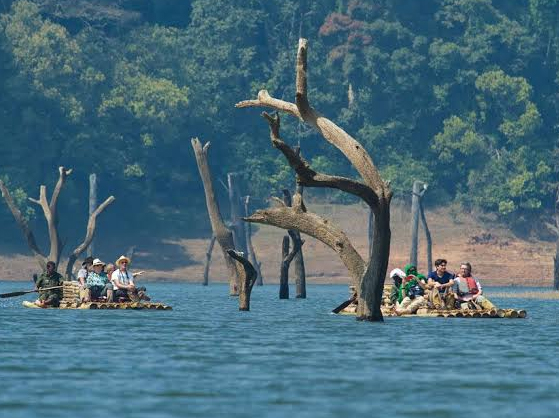
Thekkady
<p>Periyar tiger Reserve, Thekkady, is an example of nature’s bounty, with great scenic charm, rich bio diversity and providing veritable visitor satisfaction. Sprawled over an area of 777 Sq .km., Periyar is one of the 27 tiger reserves in India. Zealously guarded and efficiently managed reserve is a repository of rare, endemic and endangered flora and fauna and forms the major watershed of two important rivers of Kerala, the Periyar and Pamba.</p> <p>People oriented and park centered community based ecotourism is the hallmark of Periyar Tiger Reserve. These programmes are conducted by local people responsible for the surveillance of the vulnerable parts of the reserve. By taking tourists along, they are involved in the conservation of the forests of Periyar and some valuable revenue is generated for community welfare. People who once made a living by illegal operations in the forests have since become forest protectors and earn their livelihood through these programmes. Hence, as a visitor, when you join them in any of these programmes, you are directly contributing towards forest conservation and community welfare.</p> <p>Chellarkovil <br /> Just 15 km from Kumily, the small village of Chellarkovil is famous for its beautiful views of the cascading waterfalls and lush green plains that slope down into the Cumbum coconut groves. The natural picturesque scenic views amidst unspoiled nature are a treat to city dwellers. Kumily Located within the Cardamom Hills, is Kumily. It is a prominent destination due to its proximity to Periyar Tiger Reserve and is an important hub of spice trading. The lingering aroma of spices is bewitching and numerous tourists visit this exotic town to enjoy the picturesque views, stay in the hotels and visit the Tiger reserve. Tours to spice plantations are arranged for tourists to view how spices are cultivated.</p> <p>Mangladevi Temple <br /> The ancient Mangala Devi temple is perched atop a thickly wooded hill and affords a panoramic view of the scenic surroundings. The temple is located 15 km from Thekkady.Built in the Pandian style of Kerala architecture, this quaint temple stands in the dense forest at the top of a peak 1337 m above sea level and is on the fringe of the Tamil Nadu-Kerala boundary.The 2000 year old temple is dedicated to the brave Mangaladevi or Kannagi, the protagonist of the Tamil epic Sillapadhikaram. A distraught Kannagi is said to have burnt down Madurai after her husband was wrongly accused of being a thief and killed.Prayers are conducted in this temple only once in a year on Chithra Purnima, the full moon day in the month of April-May. On this holy day, the temple hums with activity as devotees flock here in large numbers.</p>
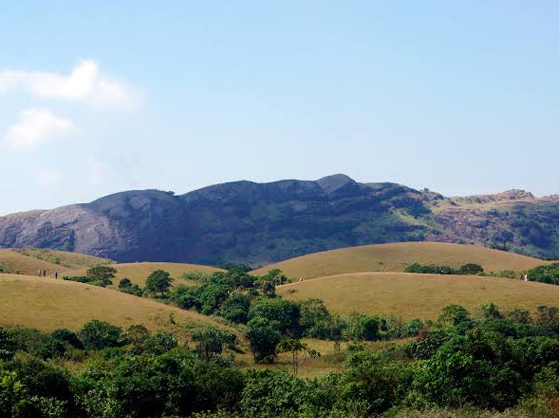
Wagamon
<p>Vagamon is a hill station located in Kottayam-Idukki border of Kottayam district of Kerala, India. It has a cool climate with the temperature between 10 and 23 °C during a summer midday. It is situated 1,100 meters above sea level. Vagamon also known as the 'Scotland of Asia', was discovered by the British who found the place ideal for tea plantations and they were followed by Christian missionaries who built their abode of service at Kurisumala in Vagamon. National Geographic Traveler has listed Vagamon on their directory of the '50 most attractive places to visit in India.</p> <p>Still untouched by commercialisation, the sleepy town with its scenic valleys, beautiful green meadows, enchanting pine forests, mists, fogs, tea estates, waterfalls with the overall greenery is really striking. The landscape is mostly hilly bald with green meadows. Vagamon is also home to a large variety of flowers and orchids. Cuddled up within three striking hills Thangal, Murugan and Kurisumala hills which are the representation of the chief religions in Kerala, i.e. Hindu, Muslim, and Christian which represent the cultural harmony. Vagamon has amenities for trekking, paragliding, mountaineering and rock climbing. However business interests are trying their best to exploit and sell and market vagamon for tourists. </p> <p>How much benefits the local people are receiving from tourism boom is to be seen. The efforts made by the Kurishumala Ashram have helped the farmers of vagamon to improve their earnings by ensuring better price for milk and marketing opportunities.<br /> Vagamon is at the fringe of the Western Ghats and the foot hills on its lower side reach up to Teekoy with a gradual descent. This narrow strip of descending land gives a vital connectivity to the plains as both sides of vagamon up to kuttikkanam on the south west and moolamattom on the north east, are marked by steep and inaccessible hill slopes. Traveling by the hill highway in this section is an exhilarating experience with deep valleys and magnificent views all around. Vagamon presents very spectacular views with an ethereal touch. Vagamon's charm is worth experiencing and is indeed one of the must see places for tourists. </p> <p>Reaching Vagamon itself is an extraordinary experience. The meandering road to Vagamon is cut in solid rock lined with pine forests. And as you wind your way through green capped hills, the rolling plains come into view thousands of feet below you. The road to vagamon from Erattupetta opened an easily accessible and direct route to vagamon from the plains. This road which was constructed in the 1950s was an engineering marvel and is rated a state highway. Had it not been for the initiative and influence of the then member of parliament Shri George Thomas kottukappillil this very expensive road would not have been materialised. The road was made in treacherous and dizzying terrain. About a dozen workers died during the construction at the hanging cliffs and a 20 foot tall memorial tower stands in honour of those who gave their life for this road project at the beginning of the road in Teekoy town junction .</p> <p>Vagamon is located 39 km from Thodupuzha, 33 km away from Palai, 45 km from Kumily, 22 km from Kuttikanam and about 65 km from Kottayam. Cochin International Airport is the nearest airport while the closest railway station is Kottayam. There are many fine resorts available in the surrounding areas with affordable cost for trekkers. Key tourist centers such as Thekkady, Peermade and Kulamavu are straightforwardly reachable from Vagamon.</p>
Kovalam
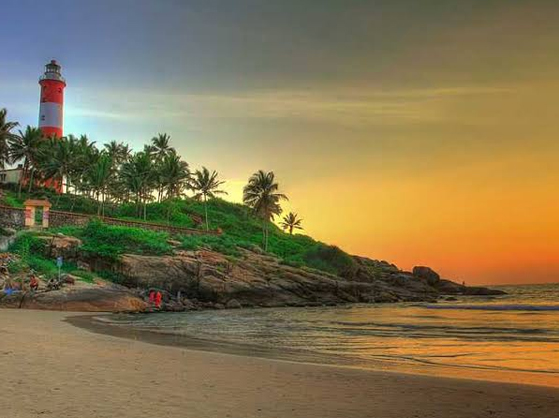
<p>Kovalam is an internationally renowned beach with three adjacent crescent beaches. It has been a favourite haunt of tourists, especially Europeans, since the 1930s. A massive rocky promontory on the beach has created a beautiful bay of calm waters ideal for sea bathing.</p> <p>The leisure options at this beach are plenty and diverse. Sunbathing, swimming, herbal body toning massages, special cultural programmes and catamaran cruising are some of them. The tropical sun acts so fast that one can see the faint blush of coppery tan on the skin in a matter of minutes. Life on the beach begins late in the day and carries on well into the night. The beach complex includes a string of budget cottages, Ayurvedic health resorts, convention facilities, shopping zones, swimming pools, Yoga and Ayurvedic massage centres.</p> <p>Thiruvananthapuram, the capital city of Kerala, is just 16 km away from Kovalam and getting there is no hassle. But if you are on holiday it is better to stay in Kovalam and visit the city.<br /> The City of Thiruvananthapuram has interesting places to see like the Napier Museum, the Sri Chitra Art Gallery, the Padmanabhaswamy Temple, Ponmudi hill station etc. SMSM Institute, a State owned handicrafts emporium, is the ideal place to pick up ethnic curios and other articles.</p> <p>Best time to visit: September to March, though it is an all-year-round destination.</p>
Contact us
Email: nsoulspices@gmail.com
Phone: +91 8310581796
Whatsapp: +91 8310581796

Copyright © Nsoul 2019.All right reserved.